F-16
Fighting Falcon
General Dynamics / Lockheed Martin · United States Air Force & 25+ Nations · Service Entry 1978
F-16 Fighting Falcon Overview
The General Dynamics F-16 Fighting Falcon — unofficially nicknamed the Viper by its pilots — is a single-engine, highly agile multirole fighter aircraft and the most widely operated jet fighter in the world. With over 4,600 aircraft built and operators spanning 25+ nations across five continents, the F-16 is arguably the most influential fighter aircraft programme of the late twentieth century.
The F-16 entered service with the USAF in 1978 as a lightweight, affordable complement to the heavier F-15 Eagle under the High-Low mix concept. What began as a pure dogfighter evolved through successive upgrades into a highly capable multirole platform capable of precision ground attack, suppression of enemy air defences, anti-ship strikes, and nuclear weapons delivery — all while retaining the agility that made it legendary in air-to-air combat.
Remarkably, the F-16 remains in full production today as the Block 70/72 — the most technologically advanced version ever built — with new customers continuing to order the aircraft more than 50 years after its first flight in 1974.
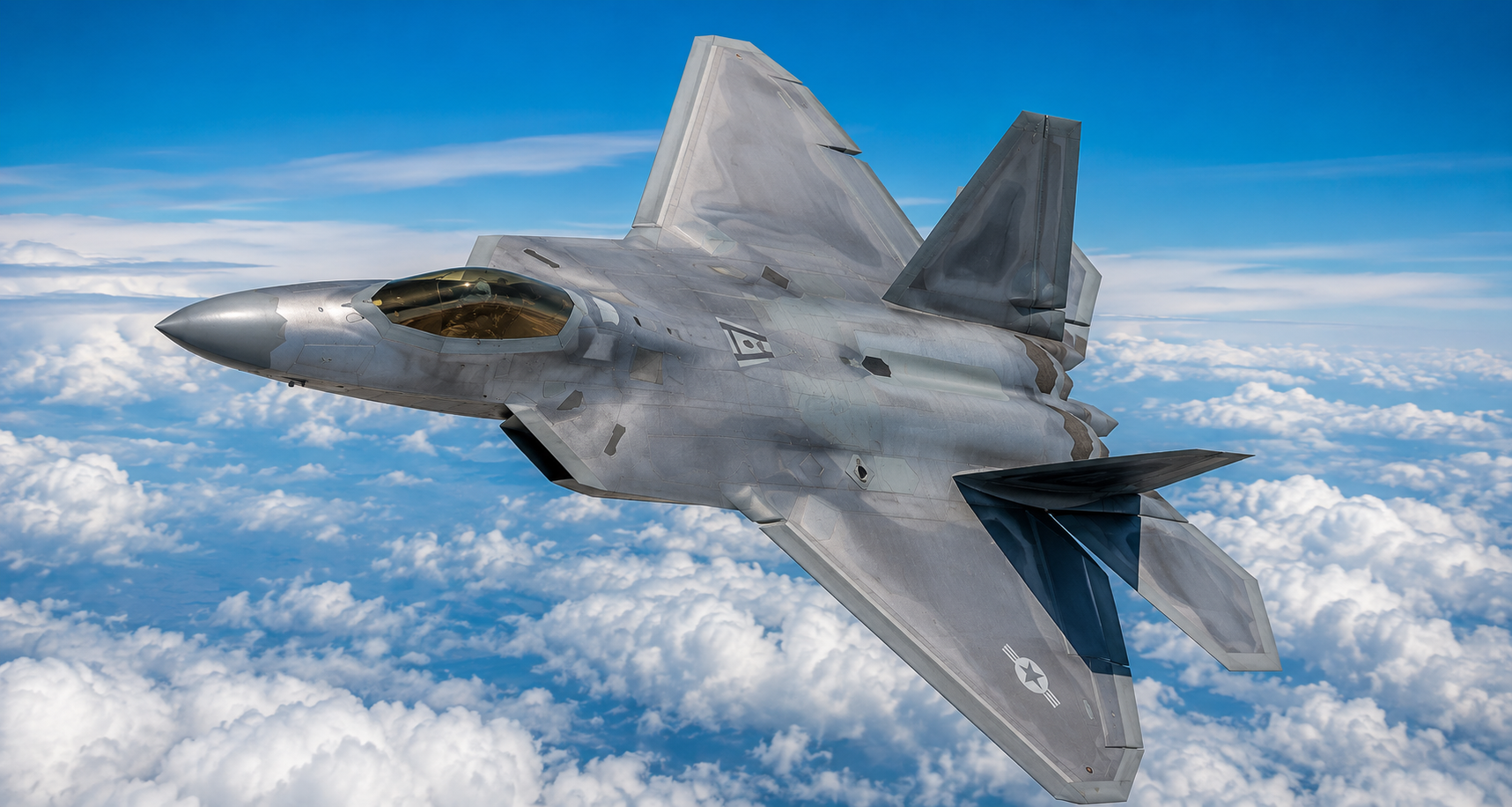
F-16 Fighting Falcon Specifications
Specifications refer to the F-16C Block 50/52 unless otherwise stated. Performance varies between blocks — the F-16 Block 70/72 features more capable avionics but similar performance figures.
F-16 Block Variants Explained
Unlike aircraft variants that represent fundamentally different airframes, F-16 Blocks represent successive capability upgrades applied to essentially the same base design. Each Block introduced new avionics, engines, or structural improvements. Understanding the Block system is key to understanding the F-16's 50-year evolution.
Initial Production — Air Defence Focus
First production F-16As with AN/APG-66 pulse-Doppler radar and limited air-to-ground capability. Established the F-16's reputation for exceptional agility. Fly-by-wire controls and reclined seat introduced for G-tolerance.
Multirole Upgrade — AN/APG-68 Radar
Introduction of the F-16C/D with the more capable AN/APG-68 radar enabling medium-range AIM-7 Sparrow missile employment. Block 30/32 introduced the choice of GE F110 or P&W F100 engines — the "alternate fighter engine" competition that drove cost down through competition.
Night Attack Capability — LANTIRN
Integration of the LANTIRN targeting and navigation pod system enabling precision night attack with laser-guided bombs. Block 40/42 aircraft became the primary precision strike platform of the Gulf War, flying 13,500+ sorties in Operation Desert Storm.
SEAD / Wild Weasel — Definitive Cold War Standard
Most capable production F-16 for the USAF. Introduced the powerful GE F110-GE-129 (Block 50) or P&W F100-PW-229 (Block 52) engines, the AN/APG-68(V)9 radar, and the Harm Targeting System for suppression of enemy air defences. The Block 50/52 became the definitive multirole standard.
Most Advanced F-16 Ever Built — Current Production
The pinnacle of the F-16 design. Features the AN/APG-83 AESA radar (derived from F-22 technology), a modern large-area cockpit display replacing analogue instruments, an Automatic Ground Collision Avoidance System (Auto-GCAS), conformal fuel tanks, and advanced electronic warfare. Being delivered to Bahrain, Slovakia, Bulgaria, and others.
F-16 Fighting Falcon Design & Technology
Fly-By-Wire & Relaxed Static Stability
The F-16 was the first production fighter aircraft to use a digital fly-by-wire flight control system. Rather than mechanical linkages between the pilot's controls and control surfaces, the F-16 uses computers to interpret pilot inputs and actuate the surfaces electronically. This enabled the designers to make the aircraft inherently aerodynamically unstable — a configuration that dramatically improves agility at the cost of being impossible to fly manually.
The F-16's relaxed static stability means the aircraft is constantly trying to depart controlled flight. The flight control computers make thousands of corrections per second to prevent this, translating the aircraft's natural instability into extraordinary responsiveness to pilot inputs. An F-16 reacts to control inputs approximately four times faster than a conventionally stable aircraft.
Reclined Seat & G-Suit Integration
To help pilots withstand the F-16's exceptional sustained g-force capability, the ejection seat is reclined at 30 degrees rather than the conventional near-vertical position used in most fighters. This reduces the effective weight of the pilot's head during high-g manoeuvres, delaying the onset of g-induced loss of consciousness (GLOC). The F-16 can sustain 9g continuously in combat — enough to cause GLOC in an unprotected pilot within seconds.
Bubble Canopy
The F-16's large one-piece blown-acrylic bubble canopy provides 360-degree visibility — the pilot can see directly behind and below the aircraft without any structural obstructions. This field of view was unprecedented in a production fighter aircraft at the time of the F-16's introduction and remains one of the best in service. The canopy is also a structural element of the airframe, contributing to fuselage stiffness.
Side-Stick Controller
Rather than the conventional centre stick used in most fighters, the F-16 uses a side-stick controller mounted to the right of the pilot. The stick is essentially immovable — it responds to force inputs rather than movement, a configuration known as an isometric controller. This design works in concert with the reclined seat and the fly-by-wire system to enable precise control inputs at high g-loading when the pilot's arm weighs several times its normal weight.
F-16 Fighting Falcon History & Combat Record
Lightweight Fighter Programme Origins
The F-16 emerged from the USAF's Lightweight Fighter (LWF) competition of the early 1970s — itself a product of the "Fighter Mafia," a group of reform-minded Pentagon analysts including John Boyd and Pierre Sprey who argued that increasingly complex and expensive fighters were defeating themselves by becoming too sophisticated to build in sufficient numbers.
General Dynamics' YF-16 competed against Northrop's YF-17 in fly-off trials in 1974. The YF-16 won on the basis of superior energy maneuverability — a concept developed by John Boyd — demonstrating decisively better sustained turn performance, acceleration, and climb rate. The USAF selected the YF-16 for full-scale development in January 1975.
Operation Desert Storm — 13,500 Sorties
The F-16's most significant combat deployment to date was Operation Desert Storm (1991), in which USAF F-16s flew approximately 13,500 sorties — more than any other aircraft type in the coalition. F-16s conducted precision strikes on Iraqi airfields, command facilities, bridges, and logistics infrastructure using laser-guided bombs. Despite flying in one of the most heavily defended airspace environments since Vietnam, F-16 losses were relatively limited.
Israeli Air Force Combat Record
The Israeli Air Force (IAF) has accumulated the most extensive combat record of any F-16 operator. IAF F-16s have been used in some of the most strategically significant air strikes in modern history, including the 1981 strike on Iraq's Osirak nuclear reactor (Operation Opera), the 2007 strike on Syria's Al-Kibar nuclear facility, and sustained operations against Iranian-backed forces in Syria. IAF F-16s have achieved numerous air-to-air kills against Syrian aircraft, contributing the majority of the F-16's overall confirmed air-to-air kill tally.
Ukraine Operations
In 2024, the Netherlands and Denmark began delivering F-16s to Ukraine as part of international military aid. Ukrainian pilots trained in Western Europe before flying combat missions against Russian forces — marking the F-16's first combat deployment in Eastern Europe and its first engagement with peer-level adversary air defence systems. The F-16's integration of modern precision weapons and SEAD capability made it particularly valuable for Ukrainian strike operations.
F-16 Fighting Falcon Operators — 25+ Nations
The F-16 is operated by more nations than any other modern fighter aircraft, spanning NATO members, Middle Eastern allies, Asian partners, and South American air forces.
F-16 Fighting Falcon vs F-15 Eagle
The F-16 and F-15 were both products of the post-Vietnam reform era and were deliberately designed as a high-low complementary pair. Understanding their differences explains the strategic logic behind the USAF's acquisition of both aircraft simultaneously.
The F-15 wins on speed, range, and payload — making it the superior dedicated air superiority platform for long-range engagements. The F-16 wins on cost, production numbers, agility, and thrust-to-weight ratio — making it the superior affordable multirole aircraft for export and high-volume procurement. The USAF deliberately paired them: F-15s for high-end air superiority, F-16s for everything else.