F/A-18
Super Hornet
Boeing · United States Navy / Marine Corps · Service Entry 1999
F/A-18 Super Hornet Overview
The Boeing F/A-18E/F Super Hornet is a twin-engine, carrier-based multirole fighter aircraft and the backbone of United States Navy carrier aviation. Replacing the F-14 Tomcat and supplementing the earlier F/A-18C/D Hornet, the Super Hornet entered service in 1999 and has since become the primary strike fighter aboard every US Navy aircraft carrier, flying missions ranging from air superiority and precision strike to electronic warfare and aerial refuelling.
Despite sharing its name with the original F/A-18 Hornet, the Super Hornet is essentially an entirely different aircraft. It is approximately 25% larger than the Legacy Hornet, carries 33% more internal fuel, and incorporates substantially improved avionics, engines, and payload capability. The Super Hornet's larger airframe also provides the structural volume necessary for significant future upgrades, giving it a long service life ahead.
The Super Hornet has seen extensive combat in Iraq, Afghanistan, Syria, Libya, and Yemen, accumulating one of the most diverse operational records of any carrier aircraft in service. It is operated by the US Navy, US Marine Corps, and the Royal Australian Air Force — the only export customer.
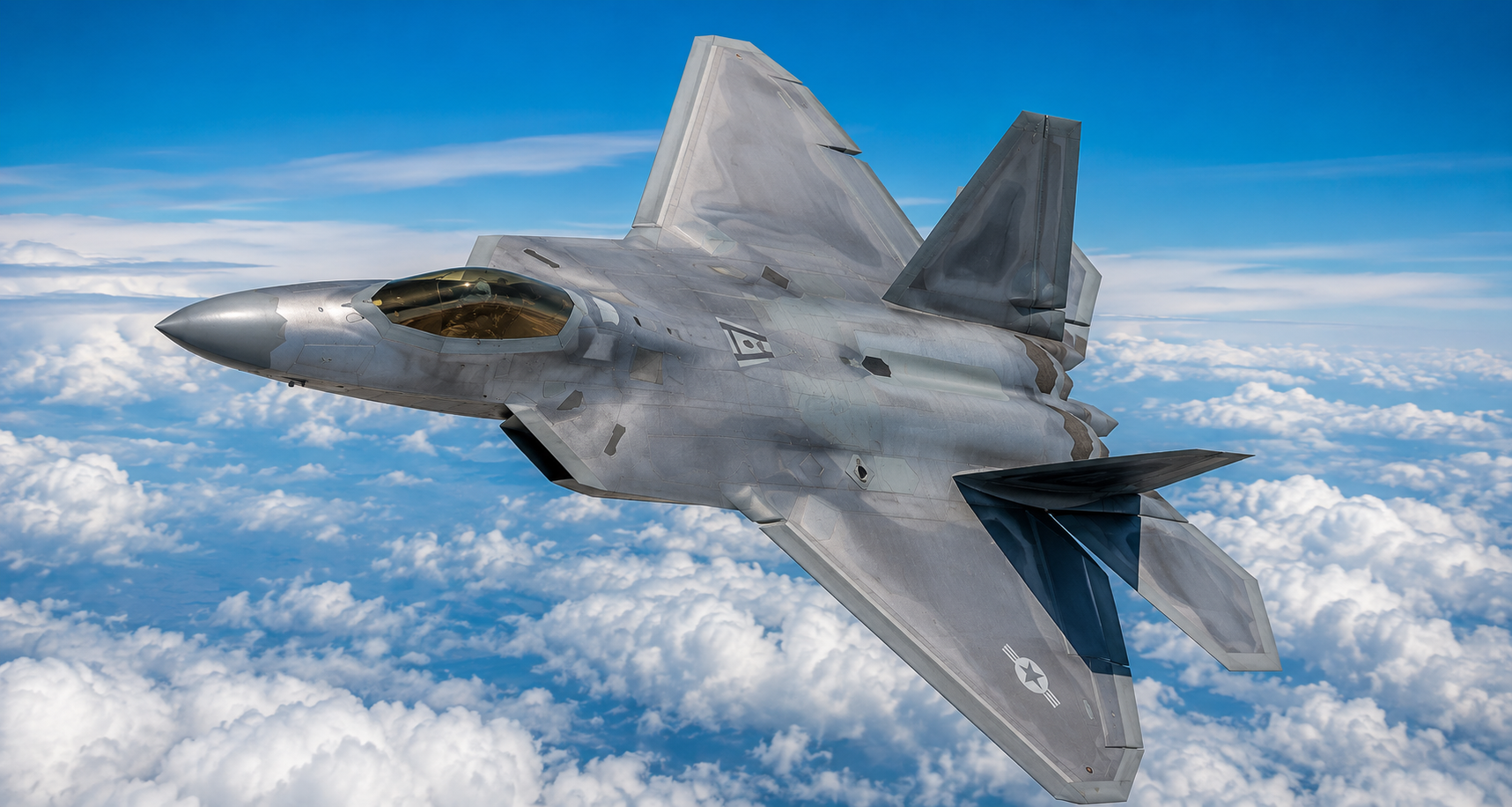
F/A-18 Super Hornet Specifications
Specifications refer to the F/A-18E single-seat variant unless otherwise stated. The F/A-18F two-seat variant shares identical performance figures.
F/A-18 Super Hornet E & F Variants
The Super Hornet is produced in two primary variants — the single-seat F/A-18E and the two-seat F/A-18F. A third electronic warfare variant, the EA-18G Growler, is derived from the F/A-18F airframe.
The primary single-seat variant flown by US Navy strike fighter squadrons (VFA). The pilot performs all mission management functions independently. Used for air superiority, strike, close air support, and buddy-store refuelling missions.
Two-seat variant with a rear cockpit for a weapon systems officer (WSO). The WSO manages sensors, weapons, and electronic warfare systems, reducing pilot workload in complex strike missions. Also used for training and as a platform for the Advanced Super Hornet upgrade.
Derived from the F/A-18F, the EA-18G Growler replaces the M61 cannon with the AN/ALQ-99 jamming system and ALQ-218 wideband receivers. The world's most capable airborne electronic attack platform, replacing the EA-6B Prowler. Operated by the US Navy and Royal Australian Air Force.
F/A-18 Super Hornet Carrier Operations
The Super Hornet is specifically engineered for the extreme demands of carrier aviation — one of the most challenging operating environments in military aviation. Every structural and systems decision in the Super Hornet's design accounts for catapult launch stress, arrested recovery shock loads, saltwater corrosion, and the tight spatial constraints of a carrier flight deck.
Catapult Launch & Arrested Recovery
The Super Hornet launches from US Navy carriers via steam or electromagnetic catapult (EMALS on Ford-class carriers), which accelerates the aircraft from 0 to approximately 165 mph in just 2 seconds. The airframe is reinforced at the nose gear attachment point and launch bar to withstand the forces involved. Landing recovery uses a tailhook that engages one of four arresting wires across the flight deck, decelerating the aircraft from approximately 150 mph to a stop in around 320 feet — imposing deceleration forces of up to 4g on the airframe and crew.
Wing Folding
The Super Hornet's outer wing panels fold upward hydraulically for carrier storage, reducing the wingspan from 44 ft 9 in to 30 ft 7 in. This allows significantly more aircraft to be stored in the carrier's hangar deck and positioned on the flight deck simultaneously. The fold mechanism is designed to withstand thousands of cycles throughout the aircraft's service life.
Super Hornet Carrier Deployment Facts
Buddy-Store Aerial Refuelling
A unique capability of the Super Hornet is its ability to serve as an airborne tanker using the AN/ARS-1 buddy store — an external fuel pod that allows one Super Hornet to refuel another during flight. This capability, known as organic tanking, is critical to carrier operations as it extends the range of strike packages without requiring dedicated tanker aircraft. The retirement of the dedicated S-3B Viking tanker in 2009 made the Super Hornet's buddy-store capability even more important to carrier air wing operations.
F/A-18 Super Hornet History & Development
Origins — Replacing the Tomcat
The Super Hornet was developed in response to the US Navy's need to replace the F-14 Tomcat and address the range limitations of the legacy F/A-18C/D Hornet. The A-12 Avenger II stealth attack aircraft programme, intended as the primary Tomcat replacement, was cancelled in 1991 due to massive cost overruns, leaving the Navy urgently needing a capable carrier aircraft.
McDonnell Douglas proposed an enlarged derivative of the existing F/A-18 Hornet — designated the F/A-18E/F — that would offer significantly improved range, payload, and growth potential. The design was substantially different from the original Hornet, with a larger wing, redesigned fuselage, new engines, and enhanced avionics capability. Boeing acquired McDonnell Douglas in 1997 and continued the programme.
Combat Service
The Super Hornet flew its first combat missions during Operation Iraqi Freedom in March 2003, striking targets in Baghdad in the opening nights of the campaign. Since then, Super Hornets have flown combat sorties in Afghanistan, Syria, Libya, Iraq, and Yemen, demonstrating sustained carrier-based power projection across multiple theatres simultaneously.
In 2014, Super Hornets from USS George H.W. Bush conducted the first US strikes against ISIS targets in Iraq and Syria, launching precision-guided munitions against vehicle convoys and command facilities. The aircraft's combination of range, payload, and precision weapons capability made it the primary strike asset in the initial campaign.
Advanced Super Hornet & Block III
The Block III Super Hornet, entering service from 2021, represents the most significant upgrade of the type. Block III features a Distributed Targeting Processor-Networked (DTP-N) system enabling advanced sensor fusion similar in concept to the F-35's architecture, conformal fuel tanks increasing range by approximately 100 nautical miles, an advanced cockpit with large-area touch displays, enhanced radar cross-section reduction measures on the airframe, and provisions for the AN/ALQ-249 Next Generation Jammer. Block III significantly narrows the capability gap between the Super Hornet and F-35C in networked strike operations.
F/A-18 Super Hornet Operators
The Super Hornet is operated by the United States Navy, United States Marine Corps, and the Royal Australian Air Force — the only export customer for the type.
F/A-18 Super Hornet vs F-35C Lightning II
The F-35C is gradually entering US Navy carrier air wings alongside — and eventually replacing — the Super Hornet. The comparison between these two aircraft defines the trajectory of US naval aviation for the next two decades.
The F-35C wins on stealth and combat radius — critical advantages in a high-threat anti-access environment. The Super Hornet counters with higher speed, lower cost, two-seat capability for complex strikes, and a larger external payload in non-stealth configuration. The US Navy plans to operate both aircraft together, using F-35Cs to penetrate defended airspace and Super Hornets to deliver heavier strike packages once air defences are suppressed.