Su-57
Felon
Sukhoi / United Aircraft Corporation · Russian Aerospace Forces · Service Entry 2020
Su-57 Felon Overview
The Sukhoi Su-57, designated Felon by NATO, is Russia's first fifth-generation stealth multirole fighter aircraft. Developed under the PAK FA (Perspektivny Aviatsionny Kompleks Frontovoy Aviatsii — Prospective Airborne Complex of Frontline Aviation) programme as a successor to the Su-27 Flanker family, the Su-57 entered limited operational service with the Russian Aerospace Forces (VKS) in 2020 following a development programme that began in the late 1990s.
The Su-57 is designed to combine fifth-generation capabilities — stealth, supercruise, advanced avionics, and internal weapons carriage — with the high maneuverability and long range characteristic of the Sukhoi design bureau's Flanker lineage. Russia positions the aircraft as a direct competitor to the F-22 Raptor and F-35 Lightning II, though independent analysts note significant differences in stealth technology, production numbers, and operational maturity.
As of 2025, the Su-57 remains in limited service with approximately 20–25 aircraft delivered to the VKS — a fraction of Russia's initial procurement targets, reflecting both the programme's complexity and the economic constraints facing Russia's defence industry.
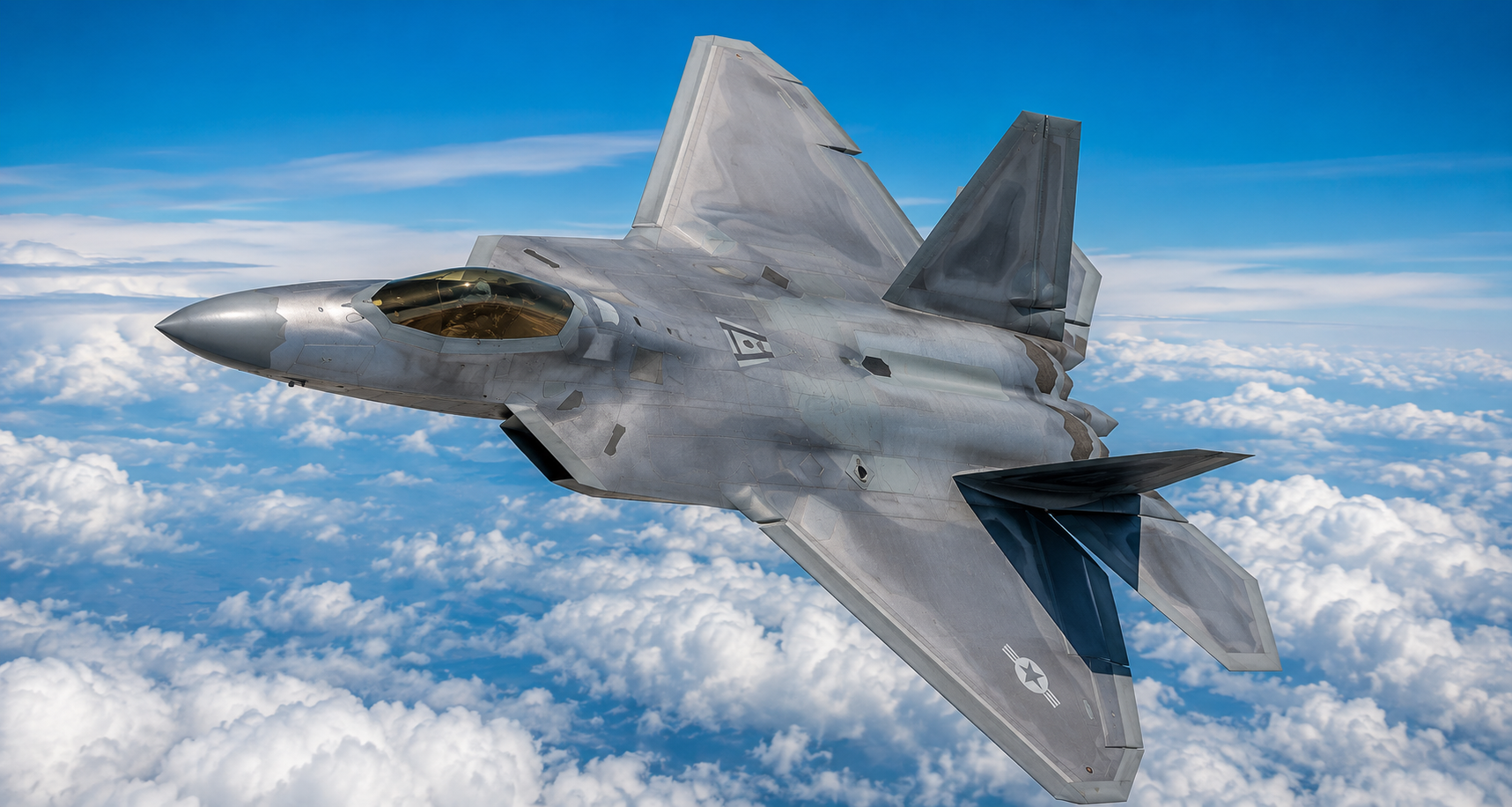
Why Is the Su-57 Called the Felon?
The Felon Name Comes from NATO
The Su-57 is called the Felon because of NATO's standardised aircraft reporting name system — not because of anything related to the aircraft's design, capabilities, or Russian designation. Russia officially calls the aircraft the Su-57 or by its development programme name PAK FA.
NATO assigns codenames to all Soviet and Russian military aircraft to allow allied forces to identify and discuss these aircraft using a common vocabulary, without needing to know or use Russian designations. The system has been in use since the late 1940s and follows strict naming conventions based on aircraft type.
How NATO Reporting Names Work
The NATO naming convention assigns codenames based on the first letter of the aircraft's role:
- F — Fighters (single or twin engine)
- B — Bombers
- C — Cargo and transport aircraft
- H — Helicopters
- M — Miscellaneous aircraft
Since the Su-57 is a fighter, its NATO reporting name begins with F — and the specific name assigned was Felon. The choice of individual name within the F-category is made by NATO's Air Standards Coordination Committee and does not carry symbolic meaning — it is simply an available name beginning with F that has not been used before.
Other Russian Fighter NATO Names
| NATO Name | Russian Designation | Aircraft Type |
|---|---|---|
| Felon | Su-57 | 5th Gen Multirole Fighter |
| Flanker | Su-27 / Su-30 / Su-35 | Air Superiority Fighter family |
| Fulcrum | MiG-29 | Multirole Fighter |
| Foxbat | MiG-25 | Interceptor / Recon |
| Foxhound | MiG-31 | Interceptor |
| Frogfoot | Su-25 | Close Air Support |
| Fencer | Su-24 | Strike Aircraft |
The naming system was originally developed by the Air Standardization Coordinating Committee (ASCC) and is now managed by NATO. Names are typically one or two syllables for easy radio communication. Single-engine fighters get single-syllable names; multi-engine fighters get multi-syllable names — which is why the twin-engine Su-57 received Felon (two syllables) rather than a single-syllable name.
Su-57 Felon Specifications
Note: Many Su-57 specifications remain classified. Figures below represent the best available open-source estimates from verified aviation publications. Classified parameters are clearly labelled.
Su-57 Felon Stealth — Is It Really Stealthy?
The Su-57's stealth credentials are among the most debated topics in aviation analysis. Russia classifies the Su-57 as a fifth-generation aircraft, implying low-observable characteristics — but most independent Western analysts assess its stealth as significantly less capable than the F-22 or F-35.
What the Su-57 Does for Stealth
- Internal weapons bays — two main bays and two smaller side bays for short-range missiles
- Radar-absorbent materials applied to key airframe areas
- Shaped engine inlets to partially screen the radar-reflective engine fan faces
- Serrated panel edges on access hatches and control surfaces
- Blended wing-body design reducing some radar reflection angles
Why Analysts Question the Su-57's Stealth
The Su-57 retains several design features that Western stealth aircraft engineers specifically eliminated. The aircraft has exposed IRST sensors on the nose, visible canopy framing, protruding L-band antenna arrays in the wing leading edges, and engine inlets that — while shaped — do not provide the level of fan-face screening seen on the F-22 or F-35. The overall airframe also shows less aggressive edge alignment than either American fifth-generation aircraft.
Most Western assessments place the Su-57's RCS significantly higher than the F-22 or F-35 — some suggesting it is closer to a reduced-signature 4.5th-generation aircraft than a true very-low-observable (VLO) platform. The Su-57 appears optimised to reduce RCS in the X-band frequencies used by fire control radars, while being less optimised for the lower-frequency bands used by long-range surveillance radar.
Russia has not published RCS figures and disputes Western assessments. The full picture of the Su-57's stealth performance will likely remain uncertain until the aircraft is tested against advanced Western radar systems in adversarial conditions.
Su-57 Felon History & Development
PAK FA Programme Origins
The PAK FA programme was launched in the late 1990s to develop a next-generation multirole fighter to replace the Su-27 family in Russian service. Sukhoi was selected as the prime contractor and began detailed design work in the early 2000s. India joined the programme in 2007 as a co-development partner under the FGFA (Fifth Generation Fighter Aircraft) designation, though India withdrew in 2018 citing cost concerns and insufficient technology transfer.
The Sukhoi T-50 prototype first flew on 29 January 2010 at Komsomolsk-on-Amur. The aircraft was formally designated Su-57 in 2017 and the first production aircraft were formally transferred to the Russian Aerospace Forces in 2020.
Slow Production & Economic Constraints
Russia initially planned to procure over 150 Su-57s but has repeatedly scaled back ambitions. Economic pressure from Western sanctions following the 2014 Crimea annexation, compounded by further sanctions after the 2022 invasion of Ukraine, significantly constrained the defence budget available for high-cost programmes like the Su-57. The KnAAPO production facility has struggled to achieve the production rates needed to equip VKS units meaningfully with the new type.
Su-57 Felon Combat Record
Syria — 2018 Evaluation Deployment
Four Su-57 prototype aircraft were briefly deployed to Khmeimim Air Base in Syria in February 2018 — Russia's first acknowledged overseas deployment of the type. The deployment lasted approximately two days and appeared to be an operational evaluation under real-world conditions rather than a sustained combat deployment. No combat engagements were reported during this visit.
Ukraine — Stand-Off Missile Operations
Su-57 Felon aircraft have been used in Russia's war against Ukraine from 2022, but in a notably cautious manner. Rather than operating over contested Ukrainian airspace where they might face Western-supplied air defence systems and F-16s, the Su-57s have been used primarily to launch Kh-59 and Kh-69 cruise missiles from Russian territory or airspace — exploiting the aircraft's long range and advanced avionics for stand-off strike missions while keeping the aircraft itself outside significant threat envelopes.
This cautious employment pattern reflects Russia's reluctance to risk its limited number of highly valuable Su-57 airframes in a contested environment — and has been noted by Western analysts as revealing about Russia's own confidence in the aircraft's survivability against modern air defences.
Su-57 Felon vs F-22 Raptor
The F-22 leads on stealth, speed, and operational numbers. The Su-57 claims advantages in combat radius and has 3D thrust vectoring on both engines versus the F-22's single-axis system. However, with only ~20 Su-57s in service versus 123 combat-coded F-22s, the practical operational balance strongly favours the US aircraft.