MiG-29
Fulcrum
Mikoyan Design Bureau · Soviet Union / Russia & 25+ Nations · Service Entry 1983
MiG-29 Fulcrum Overview
The Mikoyan MiG-29, designated Fulcrum by NATO, is a twin-engine fourth-generation multirole fighter aircraft developed by the Soviet Union and one of the most widely exported combat aircraft of the Cold War era. Entering service in 1983 as the Soviet Air Force's frontline tactical fighter, the MiG-29 was designed to counter the American F-16 Fighting Falcon and F/A-18 Hornet — matching their agility and exceeding their top speed at a price point that made it accessible to a broad range of nations.
With a top speed of Mach 2.25 — matching the fifth-generation F-22 Raptor — the MiG-29 is one of the fastest fourth-generation fighters ever built. Its combination of high speed, high maneuverability, and twin-engine reliability made it the standard frontline fighter for Warsaw Pact nations and dozens of export customers across Africa, the Middle East, Asia, and Latin America.
Operated by over 25 nations and combat-proven in multiple conflicts from the Gulf War to the ongoing war in Ukraine, the MiG-29 remains an operationally significant aircraft despite being over 40 years old — a testament to the soundness of its original design.
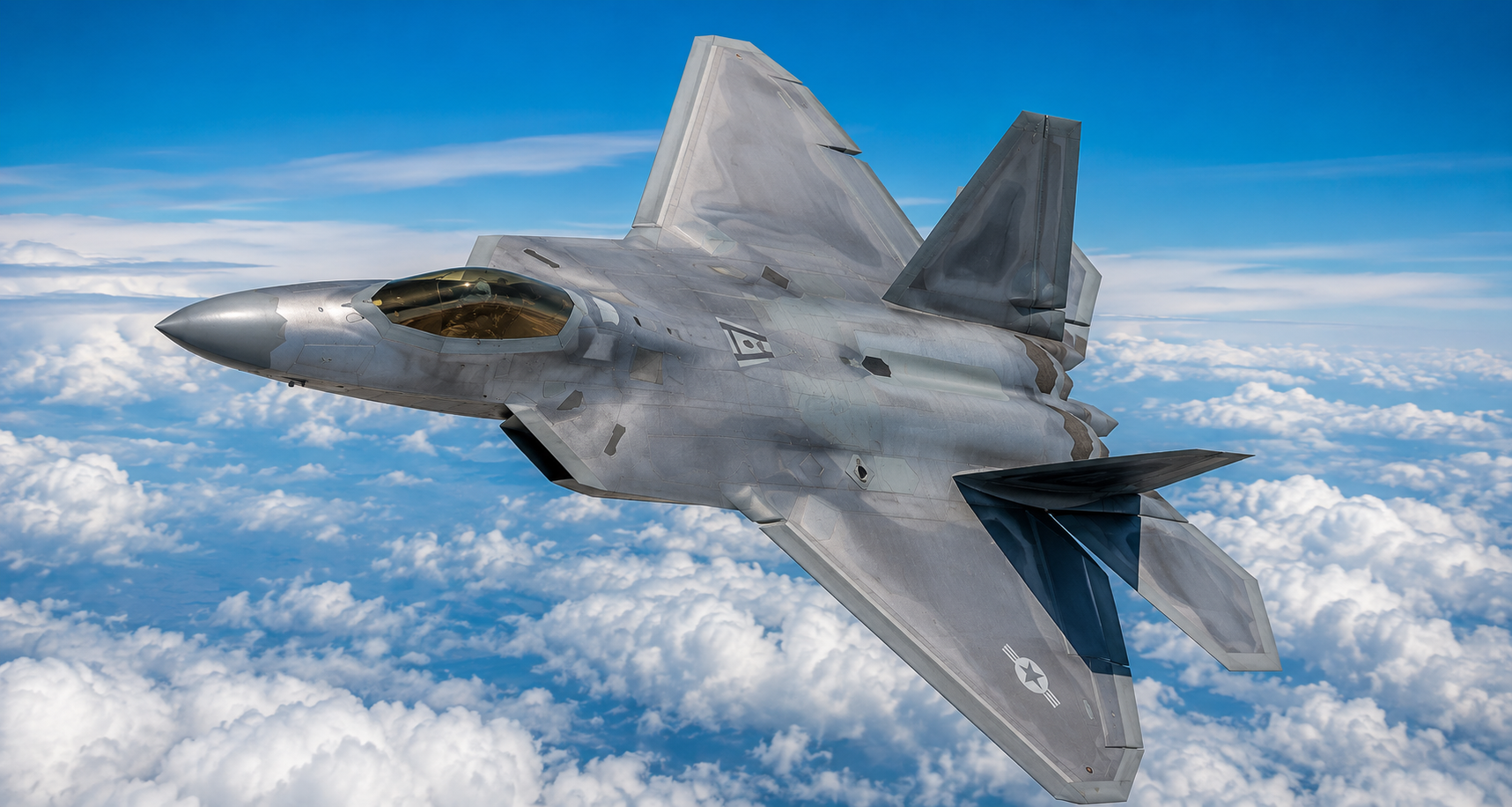
MiG-29 Fulcrum Top Speed
MiG-29 Top Speed — One of the Fastest 4th Gen Fighters Ever Built
The MiG-29 Fulcrum has a maximum top speed of Mach 2.25 — approximately 1,490 mph (2,400 km/h) at altitude with afterburner. This is the same top speed as the fifth-generation F-22 Raptor and significantly faster than the F-16 Fighting Falcon (Mach 2.0), F-35 Lightning II (Mach 1.6), and Eurofighter Typhoon (Mach 2.0) — making the MiG-29 one of the fastest production fighter jets ever operated in quantity.
How Fast Is the MiG-29 Compared to Other Fighters?
The MiG-29's Mach 2.25 top speed places it in elite company. Only a handful of production fighters have ever achieved or exceeded this speed — including the MiG-25 Foxbat (Mach 2.83), MiG-31 Foxhound (Mach 2.83), and F-15 Eagle (Mach 2.5+). The MiG-29's ability to reach Mach 2.25 with its twin Klimov RD-33 turbofans reflects the Soviet design philosophy of prioritising raw performance for the intercept and air superiority mission.
It is worth noting that the MiG-29's combat radius is significantly shorter than Western contemporaries — approximately 430 nm compared to the F-16's 575 nm. The aircraft was designed primarily for short-range tactical air defence rather than long-range strike, meaning its extraordinary top speed is most useful in defensive intercept scenarios rather than extended offensive operations.
MiG-29 Fulcrum Specifications
MiG-29 Key Variants
The baseline MiG-29A was the original production standard. The MiG-29S introduced the N019M Topaz radar with limited beyond-visual-range capability using the R-77 active radar missile, plus an additional centreline fuel tank. The MiG-29S became the primary Cold War standard and remains widely operated.
Substantially upgraded variant with a new glass cockpit, enlarged dorsal fuel tank (+40% fuel), N019MP radar, improved EW systems, and genuine precision strike capability with Kh-29 air-to-ground missiles and laser-guided bombs. The SMT brings the MiG-29 closer to true multirole capability.
The latest MiG-29 family evolution with a new Zhuk-ME AESA radar, substantially improved avionics, three-axis fly-by-wire controls, IRST system, and greatly enhanced multirole capability. Offered for export as the MiG-35. Russia has ordered a small number for the VKS.
Folding-wing carrier variant for the Russian Navy operating from Admiral Kuznetsov and the Indian Navy's INS Vikramaditya. Features reinforced landing gear, arrestor hook, folding wingtips, and multimode radar. India is the primary current operator with approximately 45 MiG-29K/KUB aircraft.
MiG-29 Fulcrum History & Combat Record
Cold War Origins
The MiG-29 was developed in response to the USAF's Lightweight Fighter programme that produced the F-16. Soviet intelligence became aware of the F-16 and F/A-18 programmes in the early 1970s and initiated a parallel programme — the PFI (Perspektivny Frontovoy Istrebitel — Prospective Frontline Fighter) — to counter them. The result was split into two designs: the heavy Su-27 Flanker for long-range air superiority, and the lighter MiG-29 for shorter-range tactical air defence.
The MiG-29 first flew on 6 October 1977 and entered Soviet Air Force service in 1983. NATO received its first intelligence assessment of the aircraft when it appeared at the 1988 Farnborough Airshow — the first time a Soviet front-line fighter had been demonstrated publicly in the West. Western pilots were impressed by its raw performance, high-alpha maneuverability, and Helmet-Mounted Sight capability, which at the time exceeded Western equivalents.
Gulf War — Mixed Results
Iraqi MiG-29s flew combat sorties during Operation Desert Storm in 1991 with poor results. USAF F-15Cs shot down five Iraqi MiG-29s without loss. The MiG-29s suffered from poor pilot training, degraded maintenance, and tactical doctrinal limitations — rather than fundamental aircraft deficiencies. The encounters confirmed the MiG-29 as a capable airframe but highlighted that training and tactics matter as much as aircraft performance.
Yugoslavia & Later Conflicts
Yugoslav MiG-29s flew during NATO's Operation Allied Force in 1999 and were engaged by USAF F-15Cs and F-16Cs. Several MiG-29s were shot down, though at least one disputed kill has been attributed to a MiG-29 pilot against a USAF F-16. Serbian MiG-29 pilots flew with considerable aggression despite being significantly outnumbered.
Ukraine War — 2022 to Present
Both Russia and Ukraine operate MiG-29s and both have used them extensively in the war following Russia's full-scale invasion in 2022. Ukrainian MiG-29s have been used for air defence and ground attack, with Poland, Slovakia, and other NATO allies donating additional MiG-29s to supplement Ukraine's fleet. The conflict has resulted in significant losses of MiG-29s on both sides, providing the first large-scale data on the type's combat performance against modern air defence systems and peer aircraft.
MiG-29 Fulcrum Operators — 25+ Nations
The MiG-29 is one of the most widely exported Soviet/Russian combat aircraft, operated across Eastern Europe, the Middle East, Africa, and Asia.
MiG-29 Fulcrum vs F-16 Fighting Falcon
The MiG-29 and F-16 were direct Cold War adversaries — both designed in the early 1970s, both entering service around the same time, and both intended as lightweight affordable tactical fighters. Their matchup defines the 4th-generation East vs West fighter debate.
The MiG-29 has the higher top speed and twin-engine redundancy. The F-16 has a longer combat radius, higher thrust-to-weight ratio, more advanced avionics, and far greater production numbers. In actual combat the F-16 has generally outperformed the MiG-29, but analysts attribute this partly to training disparities rather than inherent aircraft capability differences.